By Joseph Reed March 17, 2026
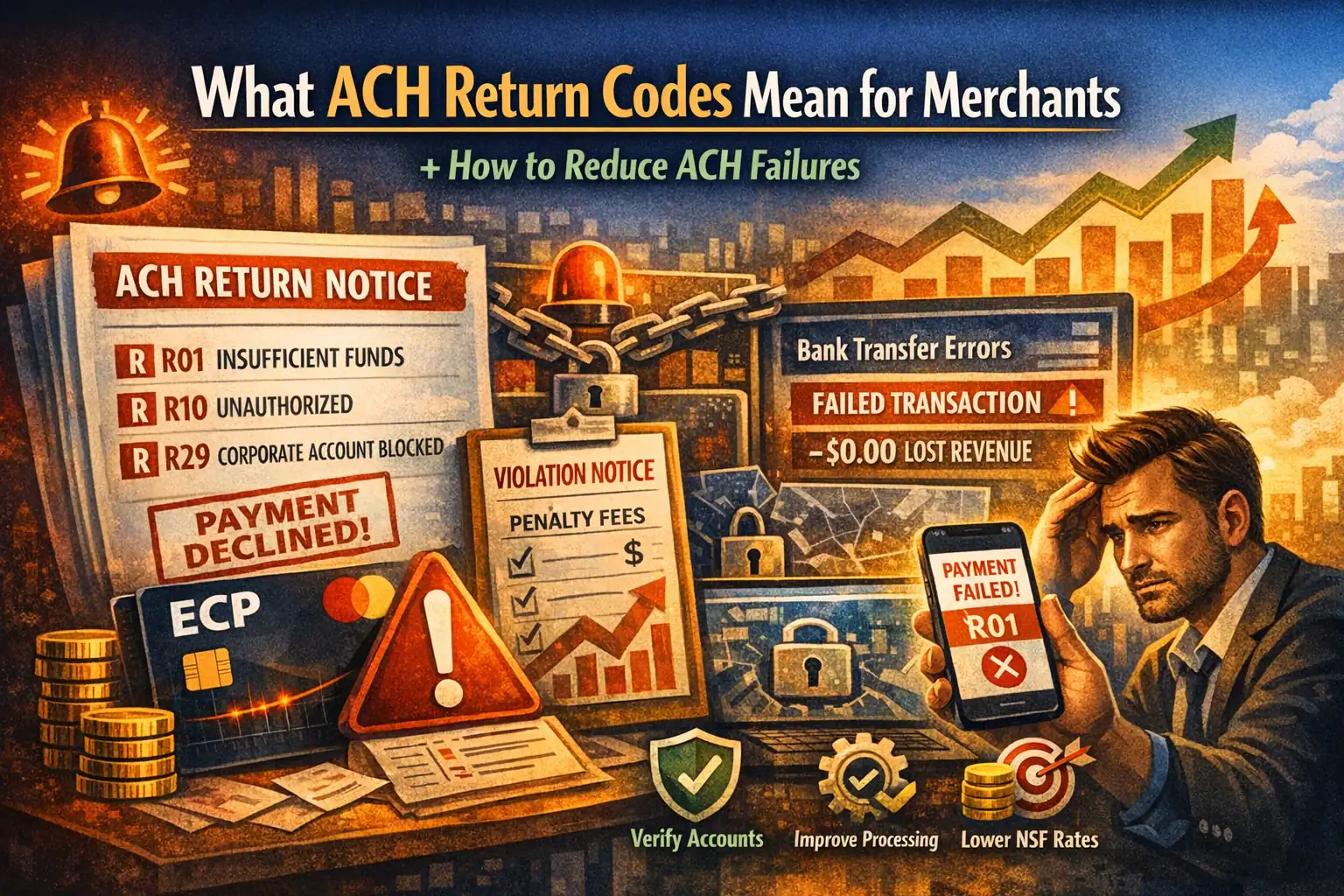
The Automated Clearing House (ACH) payment system allows businesses to send and receive funds electronically from one bank account to another. It is commonly used by businesses because the cost of using the ACH payment system is less than the cost of using credit cards. However, sometimes the ACH payment system fails.
In case the payment transaction is not successful, the bank sends a message called the ACH return code. It indicates the reason why the payment transaction has been declined. It is significant to understand the ACH return code because it gives a hint about the payment processing issue. If the business pays close attention to the return code, it will be able to understand the issues that arise in the payment transaction.
Table of Contents
What ACH Return Codes Actually Represent
ACH return codes represent a set of standardized communications that occur within the banking network when a payment cannot be processed. Each code indicates a reason for the non-payment processing from the receiving bank. For instance, a payment may not be processed due to an error in the account number, insufficient funds in the account, or revocation of the authorization.
Return codes follow the set network rules for the NACHA network. For a merchant, return codes do not only represent a series of technical communications but also help them identify the cause of the failed payment. For instance, a merchant can identify the cause for a failed payment as customer-related, due to errors in the data entered, or authorization issues.
The Business Impact of ACH Payment Failures
However, in some cases, these failures in ACH transactions can cause problems in the cash flow of businesses. For instance, when there is an issue in an ACH payment, businesses may need to investigate the matter, contact customers, and even retry the payment. This can cause delays in the payment process.
Also, if these failures in payment are frequent, it may affect customer relationships or even cause problems in accounting. By analyzing these return activities in ACH transactions, businesses can understand whether these failures are frequent or not.
Frequent patterns in return codes may indicate problems in the billing process, payment scheduling, or even customer communication. By analyzing these issues, businesses can understand how these failures affect their operations. Then, they can implement strategies to prevent these failures.
Common Return Code – R01 Insufficient Funds

Perhaps the most common return code in ACH is R01, which simply indicates that the customer does not have enough money in their account to cover the transaction. This is generally not a permanent situation but rather a temporary problem. Many customers simply need time to put money into their accounts.
However, in many cases, it is not just a simple matter of waiting. Many customers experience financial instability. This is why it is important that merchants not simply wait but rather adjust their billing cycle to correspond with the pay cycle of their customers. Adjusting the billing cycle by even a small amount can greatly improve the rate of successful transactions.
Common Return Code – R02 Closed Account
The R02 return code indicates that the bank account used for the transaction has been closed. This kind of failure is usually not fixed by retrying the payment. In case of a closed account return, the merchant has to contact the customer and ask for new banking details.
Closed accounts mostly happen when the customer has changed their bank or has replaced the old account. If the billing systems continue to process the closed accounts, the failure will continue. Monitoring R02 returns will help the merchant identify the outdated payment information in the system. It will help the merchant update the information on time and avoid disruptions in the payment process.
Common Return Code – R03 No Account Found
The return code R03 occurs when the receiving bank cannot find the account specified in the transaction. This occurs most commonly when the account number or the routing number has been entered incorrectly. Even a small error in the number can cause the transaction to be rejected. Merchants who receive an R03 return code should check the banking details supplied to them by the customer and then try to process another transaction.
Today, many payment systems have been equipped with tools that validate the banking details of customers during enrolment. This has reduced the chances of incorrect account details. Correct banking details at the time of enrolment are one of the most effective ways of reducing errors in ACH transactions.
Common Return Code – R07 Authorization Revoked
The R07 return code implies that the account holder has revoked the authorization for the ACH debit. This simply means that the customer has requested the bank to stop allowing the merchant to debit their account. Revoking authorizations mostly occurs when customers decide to terminate a subscription service.
If a merchant receives an R07 return code, they should immediately stop sending additional debits to the account. This is because revoking an authorization may be a violation of the ACH network rules. To avoid revoking authorizations, a merchant needs to maintain a record of customer authorizations. This can be achieved by having transparent cancellation procedures.
Why Monitoring Return Rates Is Important
Monitoring return rates for ACH payments is a vital activity for businesses that use this payment method. The ACH network has set guidelines for return rate thresholds. If a merchant experience return rates that exceed these thresholds, they may be under scrutiny by payment processors or network operators.
By monitoring return rates, a merchant can identify trends in a timely manner. For example, a sharp rise in return rates for insufficient funds may be a sign that the payment schedule needs to be adjusted. Monitoring return rates can also be used to identify trends for certain customer groups.
Improving Payment Data Accuracy

Customer banking information is among the most critical elements that help prevent failed payments. Many return code errors result from basic data input mistakes or outdated customer banking information.
Merchants can help prevent these mistakes by incorporating verification processes into the customer payment enrollment. Verification software checks if the routing number and account number match an existing bank account. Some software even checks the account owner to ensure that the customer has permission to use the account.
This validation of customer payment information before initiating the payment reduces the failure rate. Investing in better data collection processes is crucial in making payment processes reliable.
Communicating Clearly with Customers
Effective communication of payment details to customers can also go a long way in reducing ACH payment problems. The most common cause of payment failure for customers can be traced to forgetfulness about an impending payment.
By sending reminders to customers ahead of an ACH payment, they can be able to check their accounts for sufficient funds. If a payment fails to go through, it would be important for the merchant to communicate to the customer the reasons for the failure.
This can be achieved by providing them with guidelines on how to resolve the matter. By doing this, customers can be able to understand what they need to do to ensure they have sufficient funds for payment.
Leveraging Technology to Reduce ACH Errors
Today’s payment technology has enabled various tools to assist merchants in reducing ACH failures. Automated billing technology has enabled the verification of account details, scheduling of payment retries for temporary failure, and sending of notifications for payment failure.
Today’s technology has enabled the use of advanced analytics to track return codes. The automation of payment processing has reduced errors associated with manual payment processing. The use of payment technology has enabled the provision of real-time data for payment activity and return rates, particularly when connected to accounting systems.
By using payment technology strategically, a merchant can easily improve payment efficiency. The use of payment technology has helped in reducing payment failure rates over time.
Using Return Code Insights to Improve Payment Strategy
It is essential to consider ACH return codes as informative rather than simply indicative of errors. The various return codes give businesses an opportunity to learn from the potential weaknesses in the payment process.
Through the constant study of return code trends, businesses can easily identify the patterns that indicate the need for alterations in the billing system, the way the business collects information, and the way the business communicates with customers.
Businesses that consider ACH analytics part of their financial management can have full control over their payment processes. Through the application of the insights obtained from the return codes, businesses can easily maintain their cash flow and customer payments.
Conclusion
The role of ACH return codes is quite significant in assisting the merchant in understanding the reason behind the failed bank payments. Instead of considering the return codes as technical issues, the merchant must consider these return codes as indicators of payment, accuracy, and authorization issues.
By understanding the reason behind the return codes, such as insufficient funds, closed accounts, or cancelled authorizations, the merchant can take immediate action and prevent the repeated failure of the transactions. The merchant can also identify the problems within the operation of the business using the return rates and trends, which can help in addressing the issues before the problems become serious.
By improving the account verification, communication, and monitoring, the merchant can avoid the issues of failed ACH transactions. By using the return code information to improve the payment processes, the merchant can build a stronger billing system.
FAQs
What are ACH return codes?
ACH return codes are standardized messages from banks explaining why an ACH payment transaction failed.
Which ACH return code is most frequently used?
One of the most reported ACH return codes is R01, which denotes insufficient funds.
After a return, are merchants able to retry ACH payments?
Yes, but only for specific codes, such as inadequate funds. Updated client data is necessary for permanent errors.
Why should retailers keep monitoring ACH return rates?
High return rates could be a sign of payment issues and raise issues with payment networks’ compliance.
How can companies lower the number of ACH payment failures?
How can companies lower the number of ACH payment failures?
What are ACH return codes?
ACH return codes are standardized messages from banks explaining why an ACH payment transaction failed.
Which ACH return code is most frequently used?
One of the most reported ACH return codes is R01, which denotes insufficient funds.
After a return, are merchants able to retry ACH payments?
Yes, but only for specific codes, such as inadequate funds. Updated client data is necessary for permanent errors.
Why should retailers keep monitoring ACH return rates?
High return rates could be a sign of payment issues and raise issues with payment networks’ compliance.
How can companies lower the number of ACH payment failures?
By keeping accurate client authorization records, monitoring return codes, providing payment reminders, and confirming bank information.